09-15-2025
Asian Design – From Mandalas to Material Design Meritocracy
The designs we see every day, whether we open apps, browse websites, or even on street signs, all seem to speak a specific language. Google’s Material Design, Apple’s Human Interface Guideline, or Microsoft’s Fluent UI all speak of a “world design” map, where only Western thought dominates.
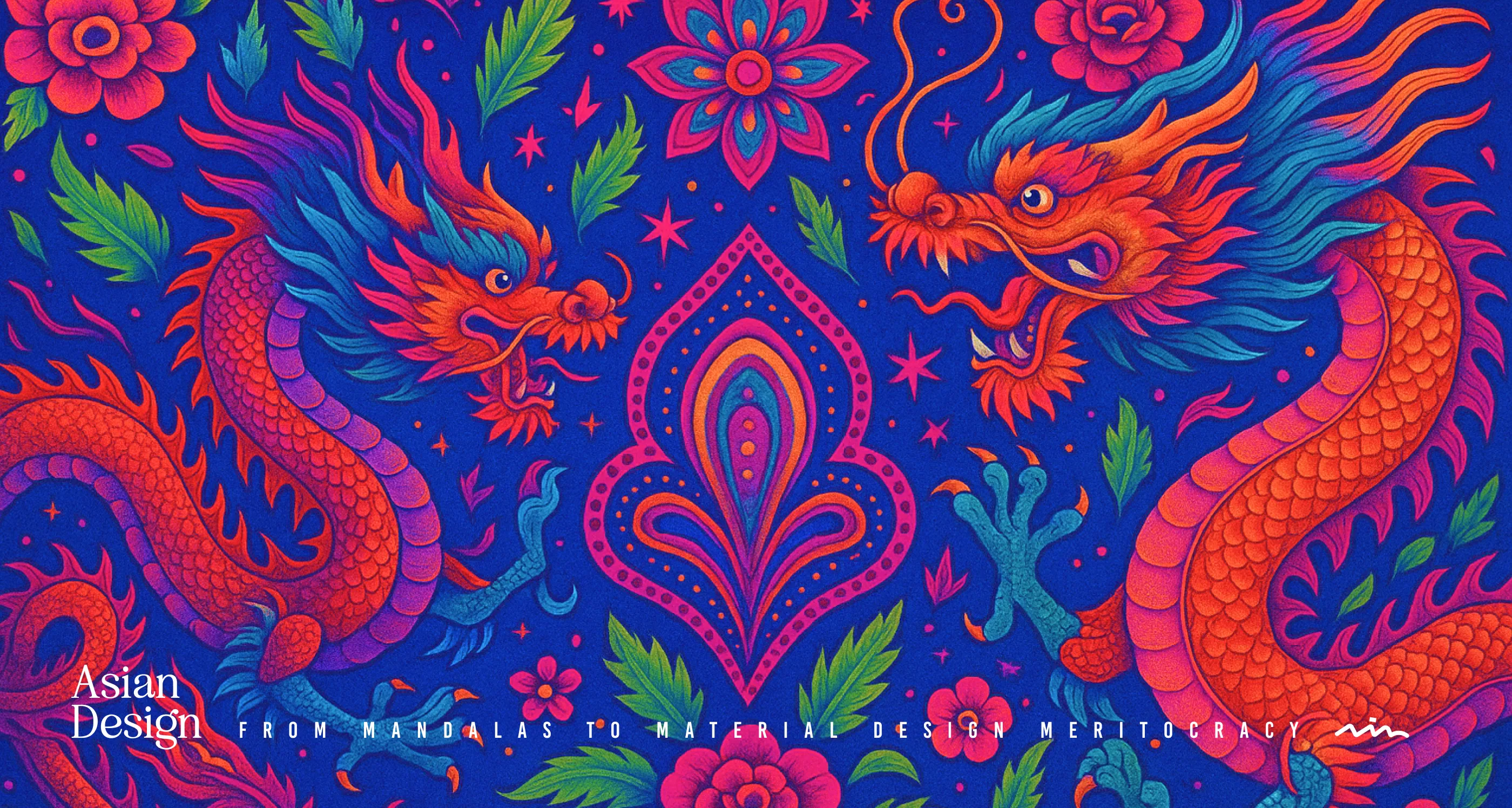
The question is, where is Asian design? But we didn’t learn design from Silicon Valley. Thousands of years ago, the layered symmetry of the mandala in the Indian subcontinent, the flowing calligraphy in China’s Tang Dynasty, Japan’s Zen aesthetics, or the geometric perfect patterns of Islamic art proved that we also knew the language of color, rhythm, and space.
Each layer of the mandala was a symbol of mental development, the brush stroke in Chinese calligraphy was the language of the soul, minimalism in Zen gardens was a tribute to emptiness. But when design became “standard”, these trends were kept on the walls of museums.
After the Industrial Revolution in Europe in the late 18th century, machine-made things required efficiency, replication, and symmetry. Suddenly, hand-made crafts became “waste.” This is where the Bauhaus School came in, declaring—”Form follows function.” This theory became the mantra of Western design.
And our design philosophy was layered, symbolic, sometimes even spiritual. But in the race for efficiency, these were called “ornamental,” “non-functional,” “ethnic,” meaning not modern. Colonial rule created not only political but also cultural standards. Mughal motifs or Nakshi Kantha embroidery all became “folk art,” where Helvetica or Swiss grid is “modern design.”
When Steve Jobs said “simplicity is the ultimate sophistication,” no one knew that he himself was a follower of Zen Buddhism. But today, Western minimalism means white space, gray tone, clean grid. And Zen minimalism meant “emptiness speaks, if you listen.” The difference between the two is huge.
We say “Design is universal.” But if that means measuring everyone on one scale, then that is not universality, it is meritocracy through a Western lens. Where Hindu pattern is “busy,” Chinese brush “inconsistent,” and Bengali art “traditional” gets the tag, Helvetica is “clean,” Material Design “accessible.” Returning does not mean dragging the old, but rather bringing the lost diversity back to the design table. Design is not just about efficiency, it is the language of the consciousness of each culture. The new generation of designers will be able to see this empty space, draw new mandalas, find new rhythms. Design speaks of the future, but it is fulfilled only if it has the memory of the past.